














The Old Hag of Mahesh Khan
A true account — Uttarakhand Hills, 2003
The Old Hag of Mahesh Khan
She was waiting. She is always waiting.
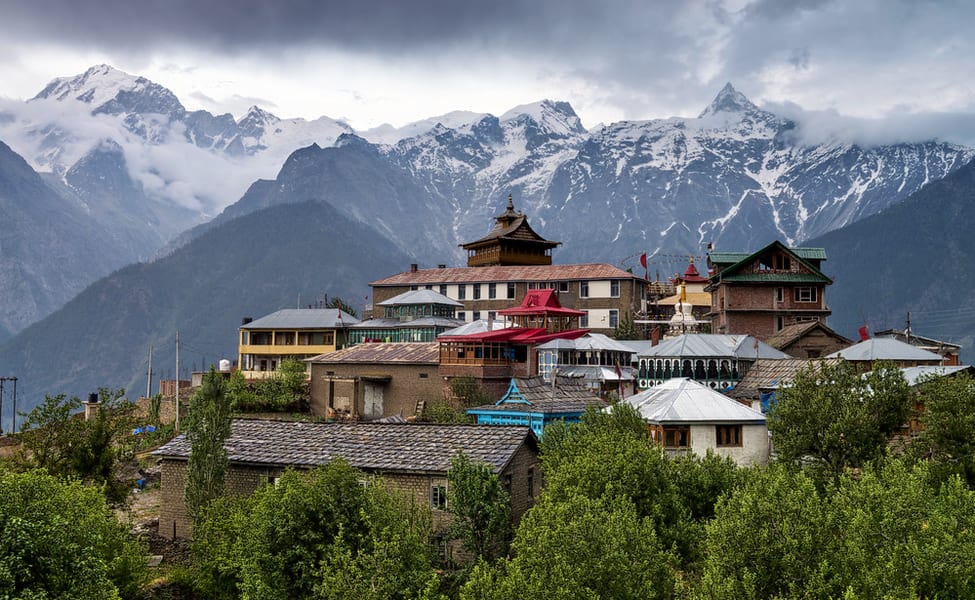
There is a stretch of road in the Kumaon hills that locals do not speak about after dark. It lies between Bhowali and Ramgarh, just past the turning near Shyamkhet’s tea factory — a corridor of deodar trees so tall and so dense that even in daylight the canopy swallows the sun whole. Those trees do not merely stand there. They watch. I have felt it every time I’ve driven that road — the unmistakable sensation of something ancient and patient following me from within the shadows, pacing my car through the branches.
The place is called Mahesh Khan. Some say Tagore named it. Some say a daughter died here. The forest keeps its secrets as only forests can.
✦ ✦ ✦
I — The Night of the First Meeting
It was a Saturday in 2003. I had left Delhi that morning and driven eight grueling hours on a highway that was less road and more wound — potholed, chaotic, howling with trucks. By the time I reached Haldwani, it was well past seven in the evening and I was scraped hollow with exhaustion. I stopped at a dhaba, got my dinner packed. And at the turning for Bhowali, I allowed myself something more: a bottle from the liquor shop, just for the room, I told myself. For later.
At the fish-stall by the Ramgarh turning, I was already two drinks lighter. The hills breathed cold around me. Rafi sahib murmured his old ghazals from the stereo. I drove upward — 30, 35 kilometres an hour — eating my fish-fry piece by piece, singing softly, riding that warm cocoon of night-driving that makes the darkness feel like a companion rather than a threat.
I should have known. The darkness here is not a companion.
“My headlights swept the curve… and there she was.”
The road bent in a wide left arc — the first of two bends before the Mahesh Khan entry gate. My headlights were on full beam, the road clean and clear ahead. And then — at the edge of the turn, pressed against the hillside like she had always been there — an old woman.
She was ancient beyond reckoning. Her face was a map of wrinkles so deep they looked carved, not aged. Her eyes were enormous and still — the eyes of something that does not sleep — and they were locked directly onto mine with a familiarity that curdled the blood. As I slowed instinctively, she raised her left hand. Slowly. With the certainty of someone who had raised it many times before, for many passing cars, in many passing years.
I did not stop. Every animal nerve in me fired at once. I pressed the accelerator and fled.
Roughly 150 metres ahead, the road turned sharply again — the second bend, steep enough to demand a gear change before climbing. I eased my foot, dropped the gear —
And I found her waiting for me.
The same woman. The same face. The same enormous, patient eyes. Same raised hand. Standing on the opposite side of the road as if she had been there all along, as if she had simply been there first, as if the 150 metres between those two bends were nothing to her at all, as if time and distance did not apply.
My hands became water on the wheel. The warmth of the alcohol vanished in an instant, burned away by something colder than the November air. I could no longer taste the fish, could no longer hear the music — the stereo had not gone silent, but my mind had. The only sound was my own voice, very small, repeating the same two words over and over.
Waheguru. Waheguru. Waheguru.
I drove. I do not remember driving. I remember arriving at Gagar, near the Mahadev Temple, and sitting outside my car in the cold for a very long time, watching the lights in distant windows and being grateful, desperately grateful, that other human beings existed.
I asked myself what an old woman — frail, barefoot, hunched against the night — was doing alone on a mountain road at eleven in the evening. I asked myself how she had covered 150 metres of steep hillside road in the seconds it took me to round that bend. I asked myself what she had wanted.
I did not let myself fully form an answer.
✦ ✦ ✦
II — Midnight, The Hotel Room
I reached the hotel. I checked in. I lay down. Within the hour I was asleep — and then, somewhere around midnight, I was not.
A warm breeze moved through a sealed room. The darkness thickened. And something sat on my chest.
Not metaphorically. Not the heavy breath of a bad dream. Something pressed down with real, measured weight, pinning me to the mattress with the casual authority of a thing that has done this before. I could not move my arms. I could not open my mouth to scream. My lungs laboured against a pressure that had no visible source.
My senses, however, were savagely awake. There was a smell — cold earth, wet leaves, something older. There were sounds at the edges of the room: a slow, deliberate approach. There were shapes at the periphery of my vision, not fully there, never fully there, but moving. And through it all, that weight. That unbearable, intimate weight on my chest, as though something were leaning down to look at my face.
The spell broke at the threshold of unconsciousness. Thirty seconds, perhaps — no more. I sat up gasping in a perfectly ordinary room. The curtains hung still. The air smelled of nothing. The shadows were only shadows.
I did not sleep again that night.
✦ ✦ ✦
III — She Has Not Forgotten
Last week, I returned to these hills for Diwali. We were driving back to Delhi — four of us in the car, music playing, the warmth of company around me. We crossed Gagar’s Mahadev Temple. We drove on.
We reached the bends near Mahesh Khan.
There were vehicles parked by the gate — nothing unusual, tourists perhaps. And between two of those parked cars, half-lit by someone’s headlamps, I saw a figure. Old. Bent. Raising one hand, very slowly, toward the road.
I said nothing to the others. I drove past without stopping.
That night — far from those hills, in a Delhi flat, with streetlights bleeding through the curtains — I was woken in the dark. The weight returned.
No smell this time. No footsteps. No shadows. Just the force: absolute and cold and utterly certain of itself, pressing me into the mattress with one clear message. I fought it. I tried to slam my arm against the wall, tried to cry out. Nothing moved. Nothing sounded. Thirty seconds. Then release.
I lay in the dark afterward, staring at the ceiling, and understood something I had spent years trying not to understand:
She did not chase me. She simply waited — and I had come back.
I do not believe in ghosts. I have never believed in ghosts. I believe in what the body knows, in the cold certainty that floods the nerves when something is wrong in a way that reason cannot yet name.
My body has known since 2003.
The Old Hag of Mahesh Khan is not a story. She is a presence. Patient as the deodar trees. Permanent as the dark between them. And she is still on that road tonight — at the first bend, and then, impossibly, at the second — raising her hand for a lift that no one with any sense will ever offer.
“I am just really scared and confused.”
So is everyone who drives that road after dark.
Hazrat-e-Dilli — @DilliKiRanaiyan